From Adam to Jesus Christ
Trace the complete biblical family tree from Adam and Eve through Noah's three sons to Jesus. Ham's descendants — the progenitors of African, Levantine, and Arabian peoples — are highlighted throughout, revealing the deep African roots woven into the very genealogy of the Messiah.
The Biblical Family Tree
A visual genealogy celebrating the African heritage in Scripture — from Adam to Jesus, featuring the dark-skinned peoples of the Bible.
The Three Lineages of Noah
From Noah's three sons — Japheth, Ham, and Shem — all the nations of the earth descended. Click any image to view full size.
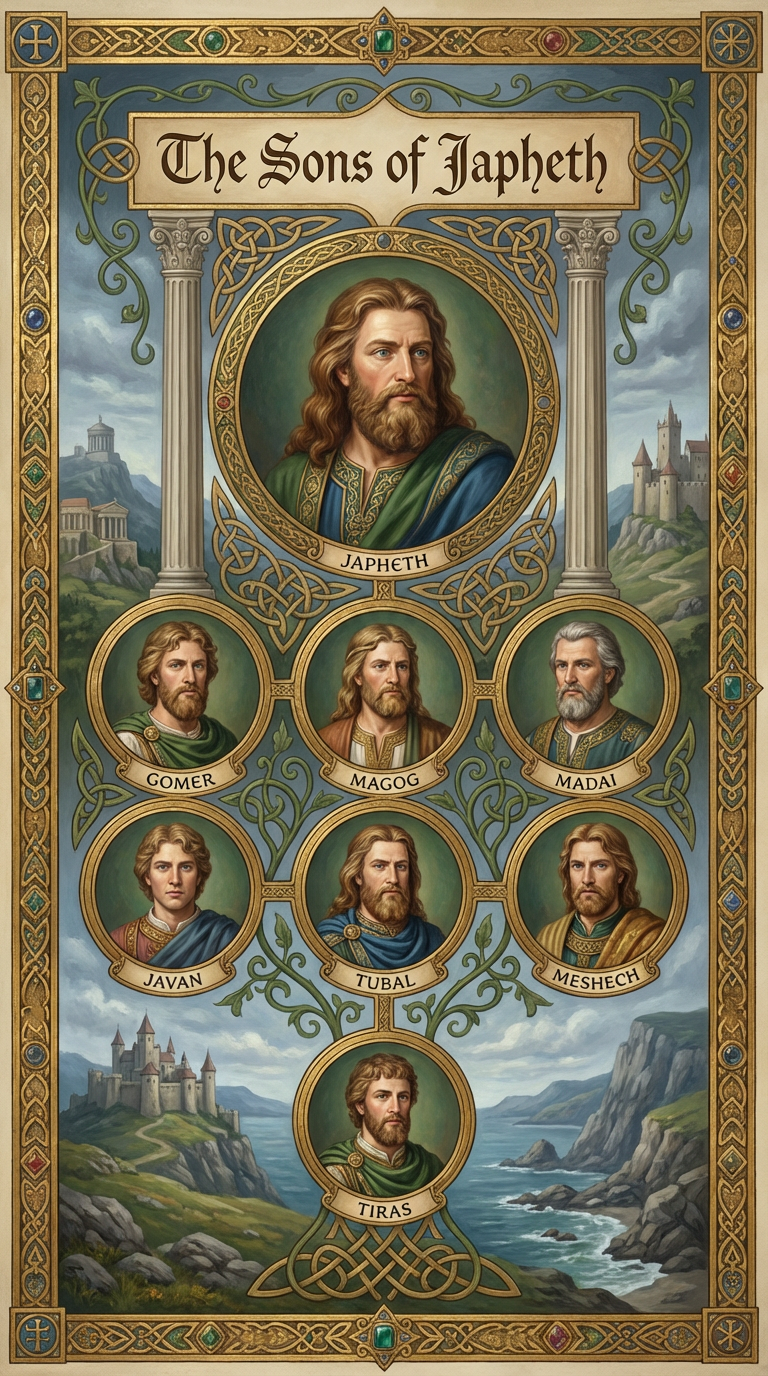
🏛️ Japheth's Line
Europeans — Greeks, Celts, Scythians, Thracians
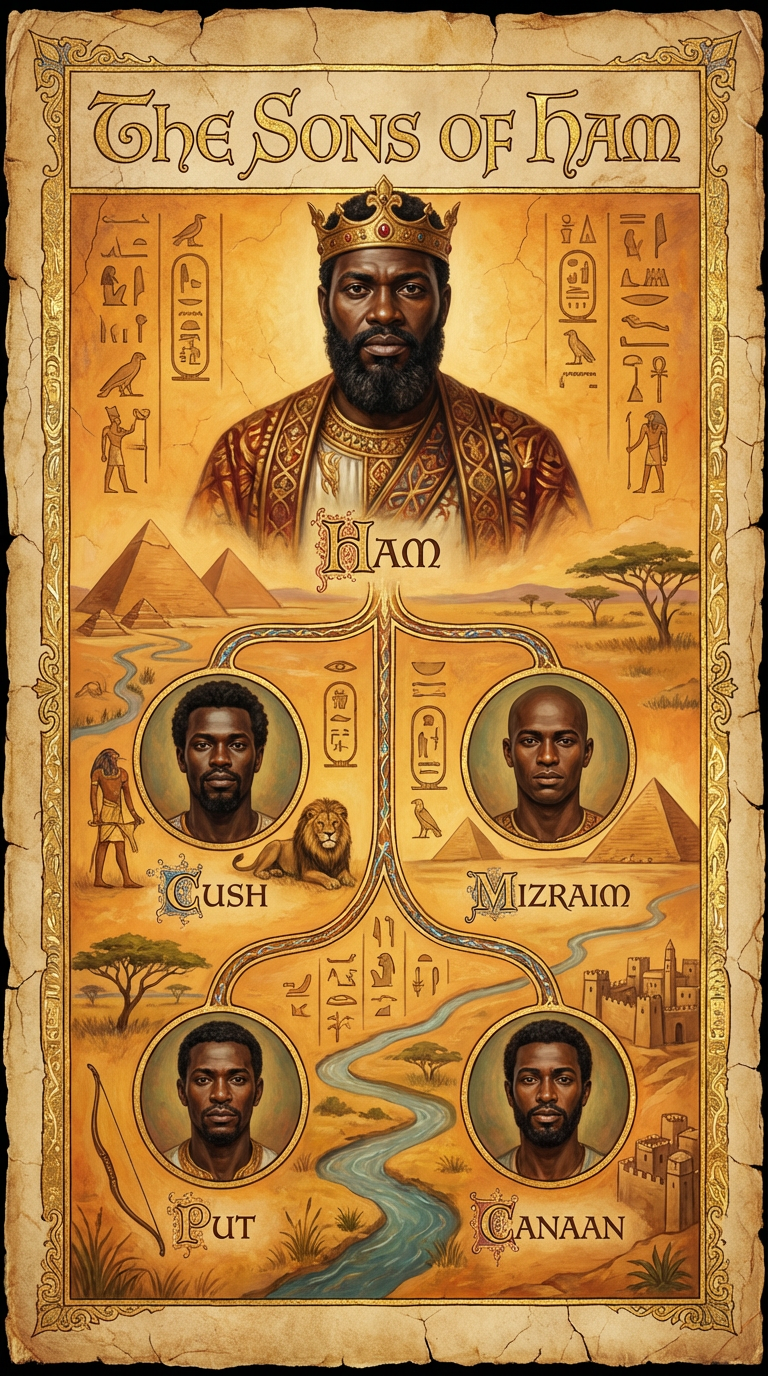
🌍 Ham's Line
Africans — Egyptians, Cushites, Libyans, Canaanites
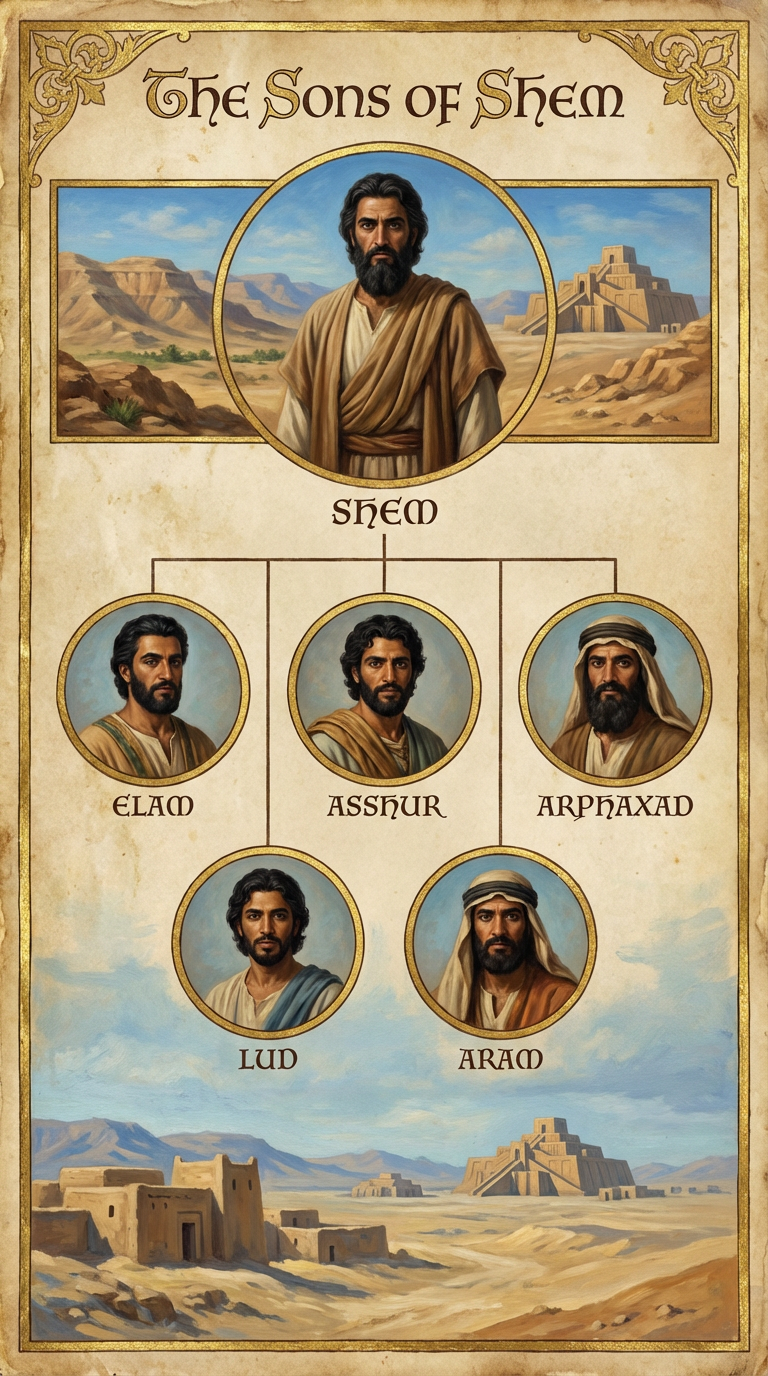
📜 Shem's Line
Semites — Hebrews, Aramaeans, Assyrians, Arabs
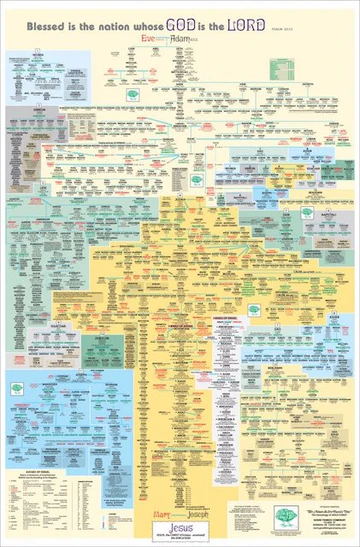
📜 Complete Biblical Family Tree
"Blessed is the nation whose God is the LORD" — Psalm 33:12
From Adam & Eve through Noah's sons to Jesus Christ — the complete genealogy of Scripture
Adam & Eve
First Man & Woman
Cain
First son
Abel
Righteous son
Seth
Appointed one → Line to Noah
Noah
Survivor of the Flood
Ham's Legacy in Scripture
The descendants of Ham played a crucial role throughout biblical history — from sheltering the infant Jesus to appearing in His own genealogy.
Egypt is "The Land of Ham"
Psalm 105:23,27; Psalm 78:51Scripture explicitly calls Egypt "the land of Ham," directly connecting the nation of Egypt to Noah's son Ham.
Jesus Fled to Ham's Land
Matthew 2:13-15The Holy Family fled to Egypt (Ham's land) to escape Herod. Africa provided refuge for the Messiah.
Hamitic Women in Jesus' Genealogy
Matthew 1:3,5Tamar (likely Canaanite), Rahab (Canaanite from Jericho), and Bathsheba (connected to Hittites) — all Hamitic women — appear in the direct genealogy of Jesus Christ.
Nimrod: Cushite Empire Builder
Genesis 10:8-12Nimrod, a descendant of Cush (Africa), built Babel, Nineveh, and the great cities of Mesopotamia — showing Hamitic influence across the ancient world.
Moses Married a Cushite Woman
Numbers 12:1Moses, leader of Israel, married a Cushite (Ethiopian/African) woman. When Miriam opposed this, God rebuked her with leprosy.
Solomon & the Queen of Sheba
1 Kings 10:1-13The Queen of Sheba visited Solomon from Ethiopia/Yemen (Cushite territory). Ethiopian tradition traces their royal dynasty to this union.
The Gospel to All Nations
“And ye shall be witnesses unto me both in Jerusalem, and in all Judaea, and in Samaria, and unto the uttermost part of the earth.” — Acts 1:8
The early church was remarkably diverse. From its very first day at Pentecost, people from every lineage of Noah — Ham, Shem,and Japheth — believed and were baptized. Trace the spread of Christianity through Africans, Jews, Greeks, Romans, and Arabs.
Ethiopian Eunuch
Acts 8:26-40Ethiopia (Cush)A high official (treasurer) of Queen Candace of Ethiopia. Philip baptized him on the road to Gaza after explaining Isaiah 53.
Simeon called Niger
Acts 13:1Antioch (from Africa)"Niger" means "black" in Latin. He was a prophet and teacher in the church at Antioch who laid hands on Paul and Barnabas.
Lucius of Cyrene
Acts 13:1Cyrene, North AfricaA prophet and teacher from Cyrene (modern Libya, North Africa). He served in the diverse leadership of the Antioch church.
Simon of Cyrene
Mark 15:21; Romans 16:13Cyrene, North AfricaThe African man who carried the cross of Jesus. His sons Alexander and Rufus became known believers.
Apollos
Acts 18:24-28Alexandria, EgyptA learned Jew from Alexandria, Egypt (Ham's land). Mighty in the Scriptures, he powerfully refuted Jewish opponents.
The Twelve Apostles
Matthew 10:2-4; Ephesians 2:20IsraelJesus' original disciples — all Jewish men from Galilee and Judea who became the foundation of the church.
The 3,000 at Pentecost
Acts 2:5-11, 41Jerusalem (from many nations)Jews and proselytes from every nation under heaven who received the Holy Spirit and were baptized in Jerusalem.
Paul (Saul of Tarsus)
Acts 9:1-19; Philippians 3:5Tarsus, CiliciaA Pharisee from the tribe of Benjamin who became the apostle to the Gentiles after encountering the risen Christ.
Priscilla & Aquila
Acts 18:2-3, 26; Romans 16:3-5Rome, Corinth, EphesusA Jewish tentmaking couple who instructed Apollos and hosted churches in Rome, Corinth, and Ephesus.
Timothy
Acts 16:1; 2 Timothy 1:5LystraSon of a Jewish mother (Eunice) and Greek father. Paul's spiritual son and pastor of the church at Ephesus.
Cornelius
Acts 10:1-48Caesarea (Italy origin)A Roman centurion in Caesarea, a God-fearer. The first Gentile household to receive the Holy Spirit.
Titus
Galatians 2:3; Titus 1:4-5Greece / CreteA Greek believer who became Paul's trusted delegate and was left to organize the church in Crete.
Luke
Colossians 4:14; Luke 1:1-4Antioch (Greek)A Greek physician and historian who wrote the Gospel of Luke and Acts — nearly 1/4 of the New Testament.
Lydia of Thyatira
Acts 16:14-15, 40Thyatira / PhilippiA merchant woman who sold purple cloth. The first European convert, baptized by Paul in Philippi.
The Philippian Jailer
Acts 16:25-34Philippi, MacedoniaA Roman jailer in Philippi who believed with his whole household after the earthquake freed Paul and Silas.
Arabs at Pentecost
Acts 2:11ArabiaPeople from Arabia were among those who heard the apostles speak in their own language at Pentecost.
Paul in Arabia
Galatians 1:17Arabia (Nabatea)After his conversion, Paul spent time in Arabia (Nabatean Kingdom) before beginning his ministry.
“There is neither Jew nor Greek, there is neither bond nor free, there is neither male nor female: for ye are all one in Christ Jesus.”
— Galatians 3:28 (KJV)
Scholarly Annotations
Each claim about the African presence in Scripture is supported by peer-reviewed scholarship and primary historical sources.
Cush refers to the region south of Egypt, encompassing modern Sudan and Ethiopia
Mizraim is the Hebrew name for Egypt, consistently called "the land of Ham" in the Psalms
Nimrod, a Cushite descendant, founded major Mesopotamian civilizations including Babel and Nineveh
The Queen of Sheba visited Solomon from a Cushite (Ethiopian/South Arabian) kingdom
Simon of Cyrene, who carried Jesus' cross, was from a North African city with a significant Jewish-African population
The Ethiopian Eunuch (Acts 8) was a high official of the Candace dynasty, one of the earliest recorded African converts