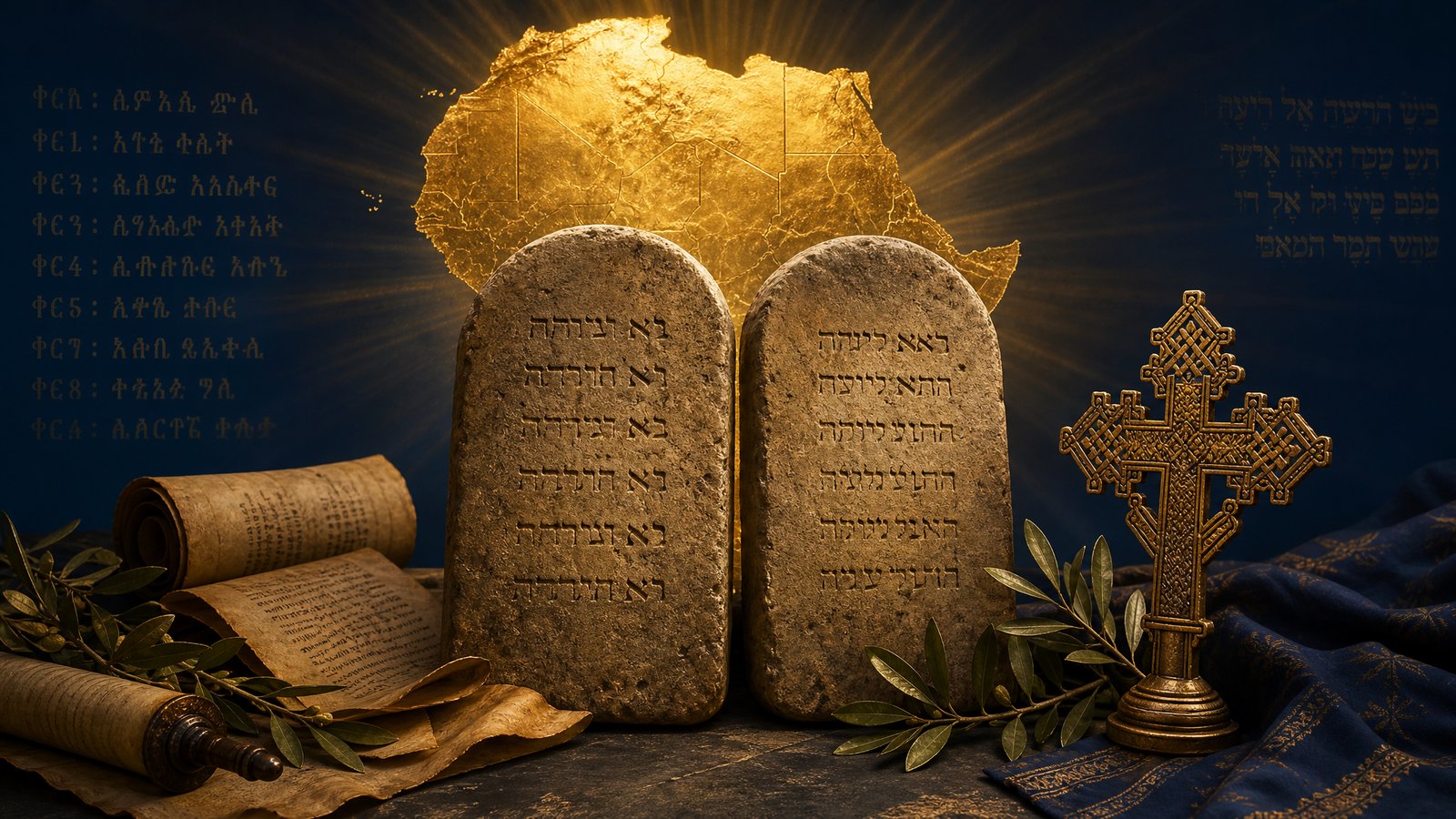
The Ten Commandments of Restoring Biblical Representation
Reclaiming the African Presence in Scripture
John Jones · June 20, 2026
Executive Summary
The Bible is a multicultural document whose African roots have been systematically obscured by centuries of Eurocentric interpretation, art, and theological training. The geographic reality of the biblical world—where Africa and Asia meet at the Jordan River Valley—integrated diverse populations from its earliest pages, yet popular religious culture has rendered that world overwhelmingly white.
Genesis 10's "Table of Nations" identifies Ham as the father of Cush (Nubia/Ethiopia), Mizraim (Egypt), Put (Libya), and Canaan, placing African peoples at the foundation of biblical genealogy. African figures recur throughout Scripture: Moses' Cushite wife, Simon of Cyrene, the Ethiopian eunuch, and the Antioch church leaders Simeon called Niger and Lucius of Cyrene.
Bottom Line for Decision-Makers:
The scholarly, historical, and psychological evidence for the African presence in Scripture is robust and the harms of its erasure are documented and measurable. Churches, educators, publishers, and ministries that act now to restore accurate representation are not engaging in identity politics—they are correcting a historical falsehood, protecting the spiritual formation of the next generation, and reclaiming the multicultural truth of the faith.
Five Research Themes
Biblical Evidence for African Presence
Genesis 10 establishes African peoples at the genealogical foundation of the post-Flood world.
Documented Harms of Erasure
The "Curse of Ham," Eurocentric whitewashing, and their theological, psychological, and educational impacts.
The Scholarly Landscape
Where experts agree and disagree — from McCray to Yamauchi, consensus and caution.
The Ten Commandments Framework
Ten actionable, biblically grounded principles for churches, educators, families, and digital ministries.
Practical Restoration Strategy
Curriculum reform, visual representation, publishing, seminary training, family discipleship, and digital tools.
Key Findings
1. Africa Is Foundational, Not Peripheral
Ham fathered the lineages of Cush, Egypt, Libya, and Canaan in Genesis 10's Table of Nations. Educators and curriculum designers should present African geography and peoples as central to the Bible's own self-understanding.
2. The "Curse of Ham" Has No Biblical Foundation
The text curses Canaan, not Ham, and never mentions race or skin color. Scholars call it a "Frankenstein creation" assembled to justify slavery. Any teaching touching Genesis 9 must actively debunk this misuse.
3. Visual Representation Has Measurable Impact
Peer-reviewed psychology documents real harm: subliminal exposure to "White Jesus" imagery increased pro-White attitudes and ingroup devaluation among Black adults. Image selection is a matter of spiritual and psychological care.
4. The White Jesus Is a Cultural Creation
The historical Jesus was a first-century Galilean Jew with likely olive-brown skin, dark eyes, and dark hair. No canonical physical description exists. Congregations can replace Eurocentric imagery without compromising orthodoxy.
Biblical Evidence for African Presence
Principal figures and texts with scholarly confidence levels
| Figure / Text | Scripture |
|---|---|
| Ham & Descendants | Genesis 10 |
| Cush / Nimrod | Genesis 10 |
| Moses' Cushite Wife | Numbers 12:1 |
| Queen of Sheba | 1 Kings 10 |
| Simon of Cyrene | Matthew 27:32 |
| Ethiopian Eunuch | Acts 8:26-40 |
| Simeon Niger & Lucius | Acts 13:1 |
| Women in Jesus' Lineage | Matthew 1:1-17 |
The Ten Commandments
A restoration framework for churches, educators, families, artists, theologians, and digital ministries
The Scholarly Landscape
Where experts agree and disagree
The Consensus
- • The "Curse of Ham" is a misinterpretation with no biblical warrant for racialized slavery
- • The white European Jesus is a cultural construction, not a historical reality
- • Africa was central to early Christian theology — Augustine, Tertullian, Athanasius, Cyprian, Origen
- • The Aksumite Empire was one of the first states to adopt Christianity officially
The Cautionary Voice
Edwin Yamauchi (Professor Emeritus, Miami University) explores historical and archaeological backgrounds while critiquing extreme Afrocentric claims.
"Some Afrocentric interpretations rely on enthusiasm that outruns archaeological and historical knowledge."
The Resolution
The strongest restoration scholarship does not claim that every biblical figure was Black in the modern sense; it claims that the biblical world was Afro-Asiatic and multi-ethnic, that specific African figures are well-documented, and that the systematic erasure of that reality is the distortion requiring correction. Recognizing that "modern racial categories were not present in the ancient Near East" actually strengthens the restoration argument.
Continue the Journey
Explore the scholarly resources, study the African presence in Scripture, and join the restoration of accurate biblical representation.
Prepared by Pastor John W. Jones, Th.D. — Efibernet Inc. © 2026
Based on peer-reviewed research with 122 cited sources